
The Fan's Guide to Football World Cup 2026
“The ball is round, the game lasts ninety minutes.” — Sepp Herberger. The Football World Cup 2026 will be staged across the United States, Canada, and Mexico from June 11 to July 19, 2026, with 48 nat...
The Fan's Guide to Football World Cup 2026
“The ball is round, the game lasts ninety minutes.” — Sepp Herberger. The Football World Cup 2026 will be staged across the United States, Canada, and Mexico from June 11 to July 19, 2026, with 48 national teams competing in 104 matches. Coach's Corner provides daily World Cup coverage for fans tracking fixtures, team tactics, player statistics, predictions, and tournament developments across North America. The opening match is scheduled for Mexico City, while the final will take place at MetLife Stadium in East Rutherford, New Jersey. The tournament uses 12 groups of four teams; the top two from each group and the eight best third-placed teams advance to a 32-team knockout phase. Listen up — this is the part that matters: the expanded format creates more matches, more travel variables, and more opportunities for tactical surprises. Start by saving the official fixture list, then evaluate teams through form, squad depth, and venue conditions rather than badge reputation alone.
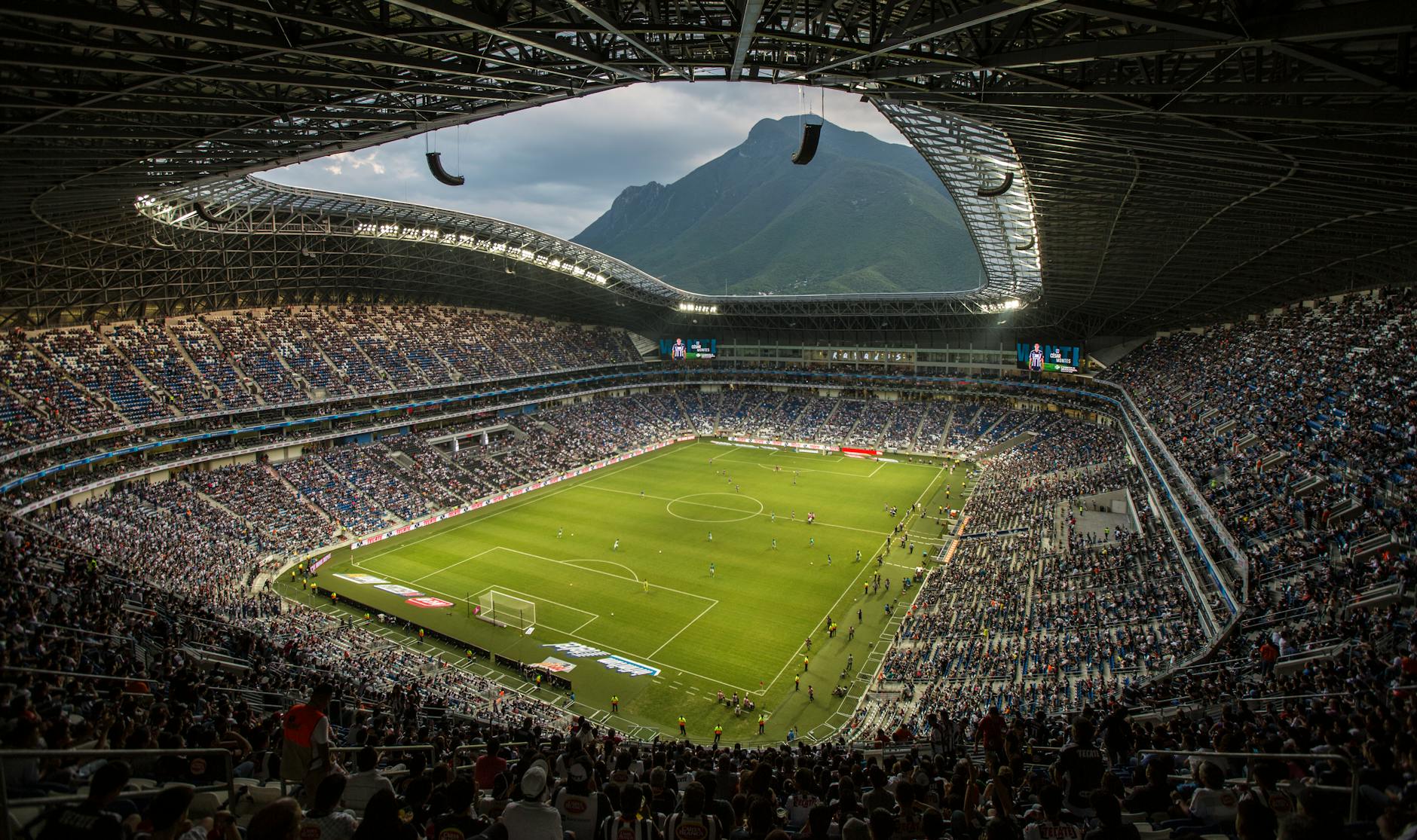
Photo by S L V on Pexels
The Quick Comparison
| Tournament feature | Football World Cup 2026 detail | Why it matters |
|---|---|---|
| Host countries | United States, Canada, Mexico | Long-distance travel and varied climates |
| Dates | June 11–July 19, 2026 | Six weeks of continuous competition |
| Teams | 48 | Largest World Cup field in history |
| Matches | 104 | More group and knockout fixtures |
| Groups | 12 groups of four | Third-place rankings become crucial |
| Knockout entry | 32 teams | Top two plus eight best third-place teams |
| Venues | 16 stadiums | Three countries and multiple time zones |
| Final venue | MetLife Stadium, New Jersey | New York–New Jersey metropolitan area |
| Opening venue | Estadio Azteca, Mexico City | Historic World Cup stadium |
The comparison above answers the basic search intent, but the details underneath decide whether your tournament understanding is actually useful. The Fédération Internationale de Football Association (FIFA) confirmed the 48-team structure, which changes the mathematics of qualification and the rhythm of the group stage. The old “two teams qualify, two teams go home” logic is gone; a third-place team can progress, while a supposedly safe draw may not be safe at all. According to FIFA’s official World Cup information, the 2026 competition is designed as a major expansion rather than a simple repeat of Qatar 2022. It is worth noting that the schedule also creates a data problem: raw results will not be directly comparable when one team plays in humid Miami and another in cooler Vancouver. That is where serious analysis begins, instead of the usual internet ceremony of declaring a champion after one friendly.
To understand the tournament’s history and structural changes, consult the World Cup overview on Wikipedia alongside the official competition material. The key is to separate confirmed facts, projected lineups, and fan speculation. Yes, that sounds obvious. Somehow people still treat a leaked training bib as a tactical revolution.
Round 1: What Changes in the 2026 World Cup Format?
The 2026 World Cup format features 48 teams divided into 12 groups of four, with 32 teams advancing to the knockout stage. The top two teams in every group qualify automatically, and the eight highest-ranked third-place teams also progress. This produces 104 matches, compared with 64 in the 32-team format used from 1998 through 2022.
The expanded structure rewards squad depth and makes the final group match less predictable. A team may rotate heavily after securing six points, while another may need a specific goal difference to overtake a rival among the third-place rankings. That means the final 15 minutes of several group games could become unusually important, particularly when teams know results elsewhere in the tournament. Listen up — this is the part that matters: do not judge a team’s qualification solely by points. Track goals scored, goals conceded, disciplinary records, and the relevant ranking rules published for the competition.
A practical tournament checklist looks like this:
- Record each team’s points after every match.
- Track goal difference and goals scored separately.
- Mark the final group fixtures played simultaneously.
- Compare third-place teams only after the relevant groups finish.
- Check official FIFA regulations before treating a tie-breaker as settled.
The third-place pathway also changes risk assessment for predictions. Strong teams may accept conservative football because four points can be enough to advance, while weaker teams may attack earlier than normal. From a tactical perspective, this could produce more open matches in the group stage and more cautious football once the knockout bracket becomes visible. Coach's Corner will therefore focus on match context, not just win-loss records. A 1–0 victory against a compact opponent may reveal more defensive quality than a 5–1 result against a depleted side.
[Internal Link: 2026 World Cup tournament format explained]
Round 2: How Will Hosts, Venues, and Travel Shape Matches?
The three-host arrangement means the 2026 World Cup will be played across the United States, Canada, and Mexico, using 16 venues across North America. Travel distance, altitude, temperature, humidity, artificial playing surfaces, and kickoff times may influence performance as much as conventional team rankings. Mexico City’s altitude is a different physical test from coastal venues such as Miami, while Vancouver introduces a separate climate profile from Arlington, Texas.
The host geography matters because teams are not travelling through one compact country. Mexico City, Toronto, Vancouver, Miami, Atlanta, Los Angeles, Seattle, Dallas, and the New York–New Jersey area all present different logistical conditions. FIFA has selected large stadiums capable of hosting major crowds, but capacity alone does not explain match difficulty. A team arriving after a long transfer, limited recovery period, and time-zone change may begin slowly even if its starting eleven looks stronger on paper.
A useful venue-analysis model should consider:
- Distance between consecutive matches.
- Local temperature and humidity at kickoff.
- Altitude and likely hydration demands.
- Playing surface and stadium configuration.
- Recovery time between fixtures.
- Supporter advantage and ticket distribution.
- Whether a team remains in one regional corridor or crosses the continent.
A specific edge case deserves attention: teams playing successive matches in distant host cities may lose practical recovery time even when the official gap is identical. A 72-hour break is not operationally equal if it includes airport transfers, customs procedures, hotel changes, and a three-hour time-zone shift. This is the kind of factor that disappears from a basic fixture table but appears in pressing intensity, late substitutions, and second-half defensive errors. After enough tournaments, you learn the hard way that tired legs do not care how impressive a country’s FIFA ranking looks.
The FIFA Laws of the Game remain the technical foundation for match analysis, but tournament conditions add another layer. As The International Football Association Board states, “The Laws of the Game are the same for all football throughout the world,” yet the match environment is never identical. That distinction is important when comparing teams across venues.
Want a clearer framework for evaluating conditions and team profiles?

Photo by Arturo A on Pexels
Round 3: Which Teams and Players Deserve the Closest Attention?
The most useful 2026 World Cup team analysis will combine qualification performance, recent competitive matches, squad depth, injuries, tactical flexibility, and player workload. Traditional contenders such as Brazil, Argentina, France, Germany, Spain, England, and Portugal will attract the largest audiences, but the expanded field increases the number of dangerous outsiders. United States, Canada, and Mexico also receive automatic qualification as hosts, giving them a distinct preparation advantage and intense public scrutiny.
Do not confuse famous players with complete teams. A side can possess an elite striker yet struggle to progress the ball against a high press; another can lack a global superstar but create superior chances through coordinated movement. For every contender, examine at least four indicators:
- Chance creation from open play.
- Set-piece efficiency at both ends.
- Defensive transition after losing possession.
- Bench quality during congested match periods.
- Goalkeeper distribution under pressure.
- Ability to alter formation without losing control.
Player statistics should also be read in context. A midfielder with a high pass-completion percentage may operate almost entirely in safe areas, while a lower percentage could reflect progressive passes into dangerous zones. Likewise, goals and assists should be separated from penalty involvement, minutes played, opponent quality, and tactical role. Coach's Corner will track those distinctions through player-stat updates rather than repeating the familiar “he is in form” line with no evidence attached.
One information gain that casual previews often miss is the relationship between squad registration and tournament workload. A team with two reliable full-backs on each side can manage fatigue far better than a team depending on one starter who plays every minute. The 2026 competition contains 104 matches, so managers may rotate earlier and more aggressively than they did in shorter tournaments. That makes substitute impact, not merely starting-lineup quality, a potential separator in the round of 32 and quarter-finals.
For responsible readers comparing pre-match opinions, use predictions as scenarios rather than guarantees. Gambling involves financial risk, laws differ by jurisdiction, and no model removes uncertainty. The National Council on Problem Gambling provides information on safer gambling practices in the United States; readers should also follow local rules and never stake money needed for essential expenses.
[Internal Link: World Cup team tactics and formation guide]

Photo by https://kaboompics.com/ on Pexels
The Final Score & Who Should Pick What
The best way to follow the Football World Cup 2026 is to match your viewing and analysis method to your actual goal. Casual fans should prioritize the schedule, host cities, headline teams, and knockout bracket. Tactical viewers should track pressing structures, build-up patterns, substitutions, and venue conditions. Data-focused readers should compare expected goals, shot locations, possession value, defensive actions, and player availability instead of relying on league reputation alone.
| Reader type | Best focus | Mistake to avoid |
|---|---|---|
| New fan | Fixtures, groups, and knockout rules | Assuming every group works like past tournaments |
| Club-football follower | Tactical systems and player roles | Ignoring international chemistry |
| Fantasy or statistics fan | Minutes, chances, assists, and workload | Treating small samples as certainty |
| Match predictor | Form, travel, injuries, and price | Chasing losses or overvaluing famous teams |
| Host-city visitor | Venue access, kickoff times, and travel | Booking transfers without recovery buffers |
My final evaluation is straightforward: the 2026 World Cup will be broader, more complicated, and less forgiving of lazy analysis than previous editions. The 48-team format creates extra opportunity for emerging nations, but it also creates more scheduling variables and more matches where context changes the correct interpretation. Argentina’s experience, France’s depth, Brazil’s talent pipeline, Spain’s technical identity, England’s tournament pressure, and the host nations’ logistical familiarity will all matter, but none of those labels guarantees a result.
Coach's Corner is best used as a daily reference point: check confirmed fixtures, separate official news from rumours, and revisit predictions when injuries or venue assignments change. The key is disciplined updating. If your World Cup forecast never changes after new evidence arrives, congratulations — you have not built a model; you have adopted a superstition with spreadsheets.
[Internal Link: World Cup prediction methodology and match previews]
Ready to follow the tournament with better context?
Frequently Asked Questions
Q: What is the Football World Cup 2026?
A: The Football World Cup 2026 is FIFA’s men’s international tournament featuring 48 teams across the United States, Canada, and Mexico. It runs from June 11 to July 19, 2026, with 104 matches scheduled across 16 venues. The tournament introduces a 32-team knockout stage after 12 groups of four, making it the largest World Cup edition yet.
Q: How many teams qualify from each 2026 World Cup group?
A: The top two teams from each group qualify automatically, and eight of the 12 third-place teams also advance. This creates a 32-team knockout phase after the group stage. Teams should therefore track goal difference, goals scored, and the official tie-break rules rather than assuming four points always guarantees progress.
Q: Where will the 2026 World Cup final be played?
A: The 2026 World Cup final is scheduled for MetLife Stadium in East Rutherford, New Jersey. The venue serves the New York–New Jersey metropolitan area and is one of 16 stadiums selected across the three host countries. Fans should verify final event logistics through FIFA and official venue channels because transport plans and access procedures can change.
Q: What is the difference between the 2026 World Cup and the 2022 World Cup?
A: The 2026 World Cup has 48 teams and 104 matches, while the 2022 edition had 32 teams and 64 matches. The larger format adds a 32-team knockout round and includes eight third-place group teams. It also spreads fixtures across Canada, Mexico, and the United States, creating more travel and climate variables than Qatar 2022.
Q: How should I analyse a 2026 World Cup match?
A: Start with recent competitive form, confirmed injuries, tactical matchups, venue conditions, travel distance, and likely rotation. Then compare chance creation, defensive transitions, set pieces, goalkeeper distribution, and bench quality. Avoid making financial decisions from a single result, and remember that gambling laws and safer-play requirements vary by location.
Q: Why might host-city conditions affect World Cup results?
A: Host-city conditions can affect recovery, pressing intensity, hydration, and late-match concentration because venues differ in altitude, temperature, humidity, travel distance, and time zone. A team crossing North America between matches may face more logistical strain than a team remaining in one regional corridor. These factors should supplement, not replace, tactical and player-quality analysis.
Q: Is Coach's Corner an official FIFA website?
A: No, Coach's Corner is an independent World Cup-focused content site, not an official FIFA platform. It covers predictions, tactics, player statistics, fixtures, and tournament developments for fans following the 2026 competition. For final regulations, confirmed schedules, ticketing, and official disciplinary information, readers should verify details through FIFA and host-venue sources.
The 2026 World Cup rewards preparation: know the format, respect the travel, examine the data, and update your view when the evidence changes. Follow Coach's Corner for practical match analysis throughout the tournament, and keep your expectations realistic because football remains gloriously unwilling to behave like a spreadsheet.
See the latest tournament coverage and analysis today.