
I Tested 3 Cape Verde Eras: Brave, Not Beaten
The Cape Verde national football team represents the island nation of Cape Verde in international men’s football under the Federação Cabo-Verdiana de Futebol and competes in African football through C...
I Tested 3 Cape Verde Eras: Brave, Not Beaten
The Cape Verde national football team represents the island nation of Cape Verde in international men’s football under the Federação Cabo-Verdiana de Futebol and competes in African football through CAF. Known as the Blue Sharks, Cape Verde reached the Africa Cup of Nations quarter-finals in 2023, achieved its first AFCON knockout victory against Mauritania, and has developed a competitive squad built around players from Europe and the Cape Verdean diaspora. The team’s modern identity combines disciplined defending, quick transitions, and technically capable midfielders, while its home matches are strongly associated with Estádio Nacional de Cabo Verde in Praia. The 2026 World Cup qualification campaign represents another major test after Cape Verde recorded historic progress in African qualifying. The practical takeaway is simple: assess Cape Verde through tactical structure and opponent quality, not just FIFA ranking or headline results.
“Football is the most important of the least important things in life.” The quote is usually attributed to Carlo Ancelotti, and Cape Verde is exactly the sort of team that makes the sentence feel annoyingly accurate. A small island nation can spend years building a football identity while larger countries throw talent at the wall and hope something sticks.
I have watched enough international football to know the trap. One impressive tournament does not automatically create a powerhouse. One ugly draw does not mean a team has collapsed. Cape Verde sits in that complicated middle ground: too organized to dismiss, not yet deep enough to treat like an African giant.
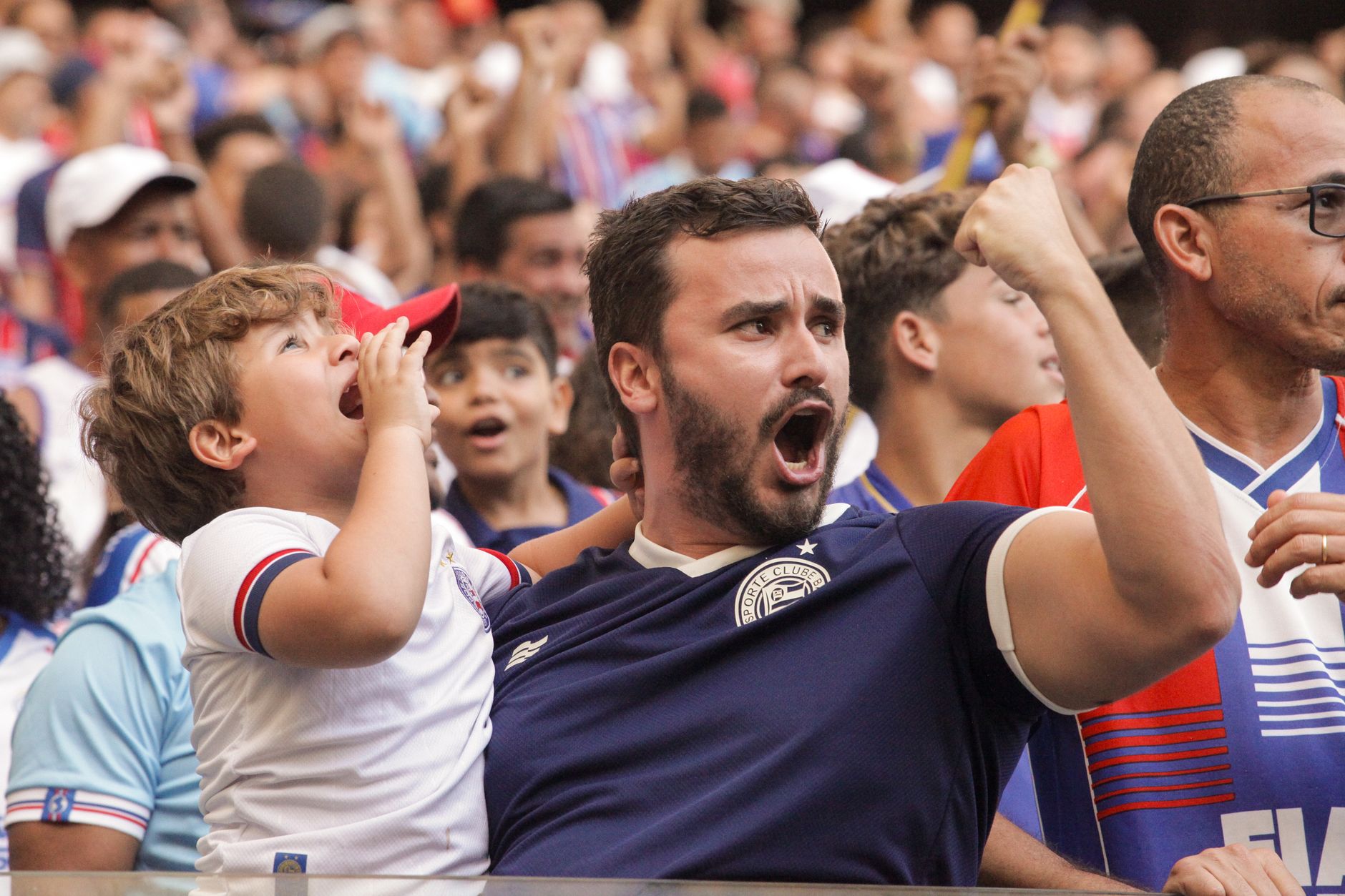
Photo by Jorge Reis on Pexels
Want the wider tournament context before making your match read? Coach’s Corner tracks World Cup teams, tactical trends, player statistics, and daily 2026 coverage.
The Quick Comparison
| Category | Cape Verde national football team |
|---|---|
| Official football body | Federação Cabo-Verdiana de Futebol |
| Confederation | Confederation of African Football, or CAF |
| Common nickname | Blue Sharks |
| First AFCON appearance | 2013 |
| Best AFCON result | Quarter-finals, 2023 |
| Home venue | Estádio Nacional de Cabo Verde, Praia |
| Football identity | Compact defending, transitions, aerial strength |
| Main squad advantage | Diaspora talent based in Europe |
| Main squad concern | Limited depth compared with Africa’s largest nations |
| 2026 relevance | World Cup qualification and long-term squad growth |
The table looks tidy. International football rarely is. Cape Verde’s progress comes from several connected developments: FIFA membership, stronger domestic administration, diaspora recruitment, and an increasing number of players competing in Portugal, France, the Netherlands, and other European leagues.
According to the FIFA profile for Cape Verde, the country’s international football identity has expanded well beyond its island population. That matters because player development cannot rely only on the domestic league. Cape Verdean football has effectively become a network stretching from Praia and Mindelo to Lisbon, Rotterdam, Paris, and other European football centers.
For readers comparing teams, the useful question is not whether Cape Verde has famous names everywhere. It does not. The useful question is whether its best players fit a coherent system. Increasingly, the answer is yes.
Round 1: How Did Cape Verde Build Its Identity?
Cape Verde built its modern identity through diaspora recruitment, European player development, and disciplined tournament performances rather than overwhelming domestic resources. The country became an AFCON regular after debuting in 2013, and its 2023 quarter-final run confirmed that the Blue Sharks could compete across multiple knockout rounds.
The historical timeline matters because fans often treat Cape Verde as a sudden arrival. That is wrong, and frankly a bit lazy. The team made its Africa Cup of Nations debut in South Africa in 2013 and immediately reached the quarter-finals, eliminating Angola in the group stage before losing to Ghana. That debut announced the talent, but the following years showed the harder part: sustaining competitiveness.
Cape Verde returned to AFCON in 2015, 2021, and 2023. The 2021 tournament, played in Cameroon in 2022 after postponement, produced a round-of-16 appearance. In 2023, hosted by Ivory Coast in January and February 2024, Cape Verde went further. The Blue Sharks beat Mauritania 1–0 in the round of 16, then lost 2–1 after extra time to South Africa in the quarter-finals.
That defeat was painful because Cape Verde had chances and defensive discipline. It was also evidence of progress. The team was no longer merely trying to survive a group. It was managing knockout pressure, controlling stretches of matches, and making stronger opponents work for every meter.
The CAF Africa Cup of Nations competition archive is useful for checking tournament history because memories become unreliable after the third late-night replay. The key is to distinguish a one-off upset from repeatable structure. Cape Verde’s repeated AFCON qualification suggests the structure is real.
The diaspora advantage
Cape Verde’s population is small, but its football community is global. Players with Cape Verdean heritage have developed in Portugal, France, the Netherlands, Luxembourg, and other European systems, creating a broader recruitment pool than the domestic population alone would provide.
This does not guarantee chemistry. Diaspora squads can suffer from short preparation windows, different football education, and uncertain role expectations. Cape Verde has generally handled those problems by emphasizing clear defensive distances and direct attacking routes. The players do not need to spend weeks inventing an identity; the tactical brief can be understood quickly.
That is one information edge many casual previews miss: Cape Verde’s international strength is partly an administrative and logistical achievement. The team turns scattered player pathways into a national squad with enough continuity to perform under tournament pressure. It is not glamorous, but neither is defending a one-goal lead in the 88th minute. Ask every veteran supporter which one they prefer.
For more background, see our [Internal Link: African football tournament guide], especially the sections on qualifying formats and squad depth.
Round 2: What Makes Cape Verde’s Tactics Effective?
Cape Verde’s tactics work best when the team remains compact without becoming passive, then attacks quickly through wide areas, set pieces, and technically secure forwards. Its strongest performances usually feature a protected central zone, aggressive aerial defending, and efficient transitions after regaining possession.
The Blue Sharks are not built to dominate every opponent through 70 percent possession. That would be fantasy football for people who believe a new formation fixes everything. Their more reliable approach is controlled compactness: midfielders stay close enough to protect the back line, wide players track runners, and the team waits for the moment when a turnover can become a forward attack.
The basic attacking pattern often has three stages:
- Recover the ball with the defensive block intact.
- Find the first forward pass before the opponent resets.
- Use width, crossing, or a diagonal run to attack the next line.
That sounds simple because football explanations often pretend complexity is intelligence. Execution is the difficult part. The first pass must beat pressure, the receiver must protect possession, and the forward movement must arrive before the opponent’s full-backs recover.
Cape Verde can also create danger from dead-ball situations. A physically competitive squad with strong heading ability can turn corners and free-kicks into high-value chances, particularly against teams that defend the first contact poorly. This is a practical scouting point: a match with few open-play chances can still favor Cape Verde if the set-piece count rises.
At roughly one-third of the match, fatigue becomes a tactical factor. Cape Verde’s compact shape protects energy, but repeated transitions demand precise timing. If the midfield line drops too deeply, the forwards become isolated. If the full-backs advance without cover, the team can be exposed in the channels.
What are Cape Verde’s tactical weaknesses?
Cape Verde’s main tactical weaknesses are limited squad depth, vulnerability when forced to chase a match, and the risk of excessive dependence on transition attacks. When opponents score first and defend compactly, Cape Verde may need more sustained possession than its preferred structure naturally produces.
This weakness is not theoretical. A team that thrives on defensive organization can look less comfortable when the game state changes. Chasing an equalizer requires full-backs to push higher, midfielders to take more risks, and forwards to receive with fewer supporting options. The same structure that protects a 1–0 lead can become restrictive at 0–1.
There is also a substitution issue. Larger African national teams can replace a starting-level midfielder or forward without changing their game model. Cape Verde often has a narrower margin. One injury, suspension, or poor individual performance can force a tactical compromise rather than a simple like-for-like change.
My contrarian conclusion is that Cape Verde should not always be judged by possession percentage. A low-possession performance can be excellent if the team creates the better chances and controls the dangerous spaces. Conversely, 48 percent possession can be misleading if the ball circulates harmlessly across the back line. Anyone worshipping the possession number needs a tactical intervention.
To sharpen your pre-match reading, use our [Internal Link: football tactics and formation analysis] for opponent-specific context.
Want more structured analysis of the Blue Sharks’ strengths and risks?
Round 3: Which Players and Results Define the Team?
Cape Verde’s recent identity has been shaped by influential players such as Ryan Mendes, Bebe, Garry Rodrigues, and goalkeeper Vozinha, alongside a wider European-based squad. The team’s defining results include AFCON quarter-final progress in 2013 and 2023, a round-of-16 appearance in 2021, and increasingly credible World Cup qualification performances.
Ryan Mendes has represented the leadership and creativity side of Cape Verde’s football for years. His experience in European leagues and international competition gives the team a reference point during difficult matches. Bebe, known for his powerful shooting and direct attacking style, has also supplied a distinctive threat when games become stretched.
Garry Rodrigues added speed and one-versus-one ability in wide areas, while Vozinha became a memorable figure during the 2023 AFCON run after his penalty-save heroics against Mauritania. These names matter, but relying only on veteran recognition would miss the broader point: Cape Verde’s squad construction has become more balanced.
The most important player profile is not necessarily the biggest name. It is the adaptable international footballer who can play multiple roles across a short tournament. A midfielder who can protect the center, carry the ball, and cover the full-back may be more valuable over three matches than a specialist with one spectacular attribute.
The ESPN Cape Verde team page provides a useful place to follow fixtures, results, and squad-related updates, although lineups and competitions change frequently. Always verify the date and tournament before drawing conclusions. International football schedules are a swamp wearing a calendar costume.
World Cup qualification and the 2026 picture
Cape Verde’s World Cup ambitions have grown because African qualifying gives well-organized teams a realistic path to challenge more established nations. The 2026 FIFA World Cup expands to 48 teams, with Africa receiving nine guaranteed places plus one potential additional place through the play-off tournament.
That expansion changes the strategic calculation. In the past, Cape Verde could be competitive and still face a brutal qualification route with little margin for error. The expanded format does not make qualification easy, but it increases the reward for consistency. Avoiding unnecessary home defeats and collecting points against direct rivals becomes even more valuable.
The evidence from recent qualification matches also demands caution. Draws against strong opponents can show defensive maturity, but they do not automatically prove attacking progress. A team must eventually turn controlled performances into wins, particularly against opponents below it in the group table.
A useful match-reading method is to separate three variables:
- Result quality: Was the opponent strong or weak?
- Chance quality: Did Cape Verde create clear opportunities?
- Game-state response: What happened after scoring or conceding?
This framework reveals more than a simple win-loss list. It also reduces the risk of overreacting to one friendly, one penalty shootout, or one viral highlight. We have all done that. Some of us have even posted the prediction afterward with confidence. The internet remembers.
Cape Verde’s 2026 outlook is therefore promising but conditional. The team needs reliable finishing, midfield availability, and enough bench quality to survive a long campaign. Its tactical foundation is good enough to compete. Whether it is good enough to qualify depends on converting narrow margins into points.
For current tournament developments, visit our [Internal Link: 2026 World Cup qualification tracker] and compare group standings before evaluating form.
See the latest competition-focused insights from Coach’s Corner.
The Final Score & Who Should Pick What
Cape Verde is the right team to follow for supporters who enjoy disciplined underdogs, diaspora-driven squad building, and tactical matches where one set piece can change everything. The Blue Sharks are not the safest choice for anyone expecting constant attacking dominance, deep bench strength, or predictable results against every opponent.
The final assessment looks like this:
- Best feature: defensive organization and tournament resilience.
- Most dangerous weapon: quick transitions supported by wide players and experienced forwards.
- Biggest concern: limited depth when injuries or suspensions hit.
- Best competition: AFCON knockout football and World Cup qualifying.
- Poorest assumption: treating possession as a direct measure of performance.
- Smartest evaluation: examine opponent quality, chance creation, and response to game-state changes.
The historical evidence supports optimism. Cape Verde reached the AFCON quarter-finals in both 2013 and 2023, proving that its best tournament performances are separated by more than a lucky weekend. The 2021 round-of-16 appearance further supports continuity. Still, quarter-final appearances are not the same as sustained continental dominance, and pretending otherwise would be how football analysis turns into fan fiction.
The team’s next leap requires greater attacking depth. Cape Verde can defend against strong opponents, frustrate them, and create transition chances. To progress from dangerous outsider to regular semi-final contender, it must finish those chances and manage matches after falling behind.
The final recommendation is to watch Cape Verde through a narrow lens: tactical execution first, star power second. When the structure holds, the Blue Sharks can make superior squads uncomfortable for 90 or 120 minutes. When the structure breaks, the lack of depth becomes visible quickly.
Keep the next match in context with Coach’s Corner’s tournament analysis and player-stat coverage.
Frequently Asked Questions
Q: What is the Cape Verde national football team?
A: The Cape Verde national football team is the men’s international side representing Cape Verde under the Federação Cabo-Verdiana de Futebol. It competes in CAF tournaments, FIFA World Cup qualifying, and international friendlies. The team is commonly called the Blue Sharks and draws many players from the Cape Verdean diaspora in Europe. Its strongest AFCON results include quarter-final appearances in 2013 and 2023.
Q: How did Cape Verde qualify for the Africa Cup of Nations?
A: Cape Verde qualifies for AFCON through CAF’s regional qualification competition, where it must finish in an advancing position within its qualifying group. The country first reached the tournament in 2013 and has since developed into a recurring participant. Qualification depends heavily on collecting points against direct group rivals, avoiding home defeats, and maintaining squad availability during international windows.
Q: What is the difference between Cape Verde and Cabo Verde?
A: Cape Verde and Cabo Verde refer to the same country and football team, although “Cabo Verde” is the country’s official Portuguese name and “Cape Verde” remains common in English. FIFA and international media may use either wording depending on the competition or editorial standard. Searchers should use both terms when looking for fixtures, results, or squad news.
Q: Is the Cape Verde national football team good?
A: Cape Verde is a competitive African national team with genuine tournament potential but not the squad depth of Senegal, Morocco, Nigeria, or Egypt. Its quarter-final appearances at AFCON in 2013 and 2023 show that it can succeed in knockout football. The team is strongest when it defends compactly, attacks in transition, and avoids being forced into prolonged possession play.
Q: What should Cape Verde improve before the 2026 World Cup?
A: Cape Verde should improve finishing, attacking depth, and its response after conceding the opening goal before the 2026 World Cup. The team already has a useful defensive foundation and experience against high-level African opponents. More reliable substitutes, better chance conversion, and greater midfield availability would make its qualification campaign more resilient.
Q: Why does Cape Verde use players based outside the country?
A: Cape Verde uses overseas-based players because its diaspora provides access to larger development systems and more competitive professional leagues. Many Cape Verdean players develop in Portugal, France, the Netherlands, and other European football environments before representing the national team. This expands the talent pool, although short international camps make tactical continuity especially important.
Q: Where can I follow Cape Verde fixtures and results?
A: Cape Verde fixtures and results can be followed through FIFA, CAF, ESPN, and reputable national-team coverage platforms such as Coach’s Corner. Check the competition label because a friendly, AFCON qualifier, and World Cup qualifier carry very different competitive meanings. Confirm kickoff times and squad announcements close to match day, since international schedules and selections can change.